

In today’s competitive landscape, channel strategy is no longer just about volume—it’s about precision. The most successful organizations aren’t chasing every partner; they’re investing in the right ones. That’s why profiling, requalifying, scoring, re-recruiting, onboarding, and nurturing long-tail partners who align with your product and services is not just smart—it’s essential.
In this series, we’re exploring the untapped potential long-tail channel partners have to offer. Part 1 exposes why long-tail partners, or those who fall below a certain revenue threshold, are hidden gems of revenue, expansion, and retention.
In Part 2, we’ll surface proven methods for reconnecting with your long-tail partners, harnessing their energy, and tapping into the free-flowing revenue vein they can be.
Long-Tail Partners Hold Untapped Potential
Long-tail partners—those who may have gone dormant or never fully activated—often represent a hidden reservoir of opportunity. They may have the right customer base, vertical expertise, or geographic reach but lack the support, clarity, or motivation to engage deeply. Re-engaging these partners can be more cost-effective than recruiting net new ones, especially when they already understand your brand and market.
Step 1: Profile for Fit
Start by profiling partners based on attributes that align with your ideal partner persona: customer base, technical capabilities, sales model, and cultural alignment. This helps you identify which long-tail partners are worth a second look.
Step 2: Requalify and Score
Use data to requalify and score partners based on their potential—not just their past performance. Consider factors like:
- Do the signals they send to the market align or fit with your product and services and ideal customer profile?
- Their target market, vertical, and business process expertise
- Look at their deployment and service models
- Who are their complementary and competitive vendors?
- Revenue volume
- Willingness to shift share from competitive brands
- Resource capability and availability
- Historical engagement trends
- Willingness to invest in enablement
- Alignment with your strategic goals
This scoring helps prioritize where to invest your time and resources.
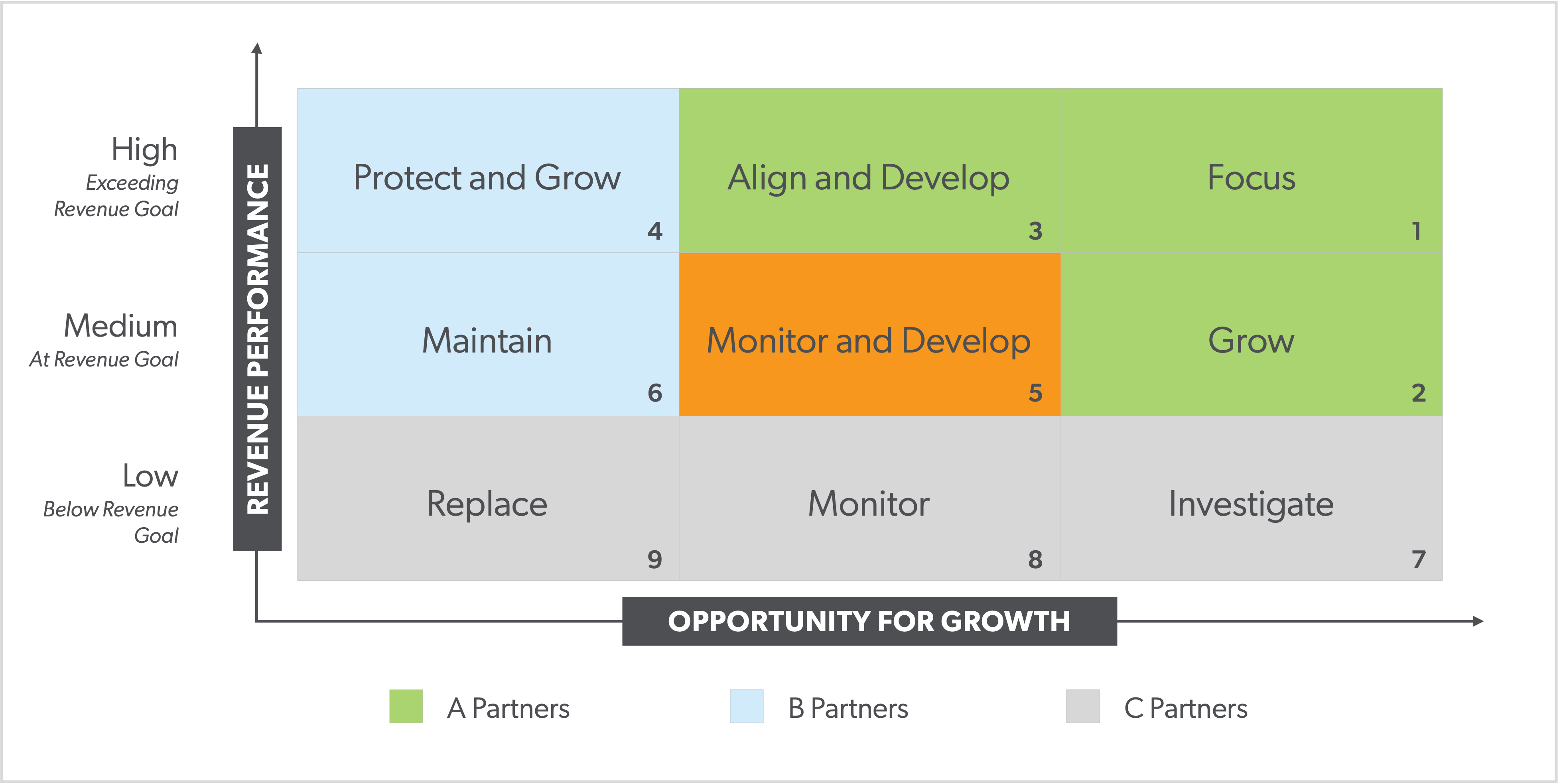
Here’s a framework that might help. We use it once we’ve scored and segmented long-tail partners based on revenue opportunity and growth potential.
MarketSource Partner Segmentation Matrix
Step 3: Re-Recruit Partners with Purpose
Re-recruitment isn’t about sending another email—it’s about reigniting interest with a compelling value proposition. Tailor your outreach to show how your product or service has evolved and how the partner can benefit from renewed engagement. Offer incentives, updated training, or co-marketing opportunities to sweeten the deal.
Step 4: Onboard Partners with Impact
A frictionless onboarding experience sets the tone for success. Provide clear enablement paths, sales playbooks, and access to tools that make it easy for partners to start selling. The goal is to reduce time-to-revenue and build confidence.
Step 5: Nurture Partners for Growth
Ongoing nurturing is where long-tail partners become top performers. Regular check-ins, performance reviews, and personalized support help maintain momentum. Invest in scalable programs like automated training, partner portals, and community forums to keep engagement high.
Focus on Growth Potential
The key is to systematically focus on partners who possess the greatest opportunity for growth. Not every long-tail partner will be worth the effort—but, when given the right attention, those with the right fit and latent potential can become powerful revenue drivers.
Re-engaging long-tail partners isn’t just a tactical move—it’s a strategic investment. By applying a structured approach to profiling, scoring, and nurturing, you unlock growth in places others overlook. In a world where partner ecosystems are increasingly vital, the long tail might just be your next big win.
Consider Outsourcing Your Long-Tail Partner Management
Even if you recognize the growth potential of your long-tail partners, you may not have the capabilities or resources in-house to serve them in a sustainable way that both maximizes their revenue contribution and your resources. Gearing up a team to tackle these segments could take months, potentially costing you significant lost revenue during that time.
If you’re not sure where to start, or the task seems overwhelming, managed sales outsourcing might be worth a look. Outsourcing the management of these accounts can accelerate the ROI of your long-tail partner coverage so you can focus on other areas of your business.
Ready to talk?

Author: Steve Carlisle
Steve is a B2B Practice Leader at MarketSource. Leveraging MarketSource’s proprietary process and best practices, Steve works with current and prospective customers to assess their sales challenges and design optimized solutions that help our clients sell more, faster.

Want More Sales?
Subscribe now to receive occasional emails with insights that help you accelerate profitable growth, risk reduction, market expansion, and revenue velocity.
What are you waiting for?